
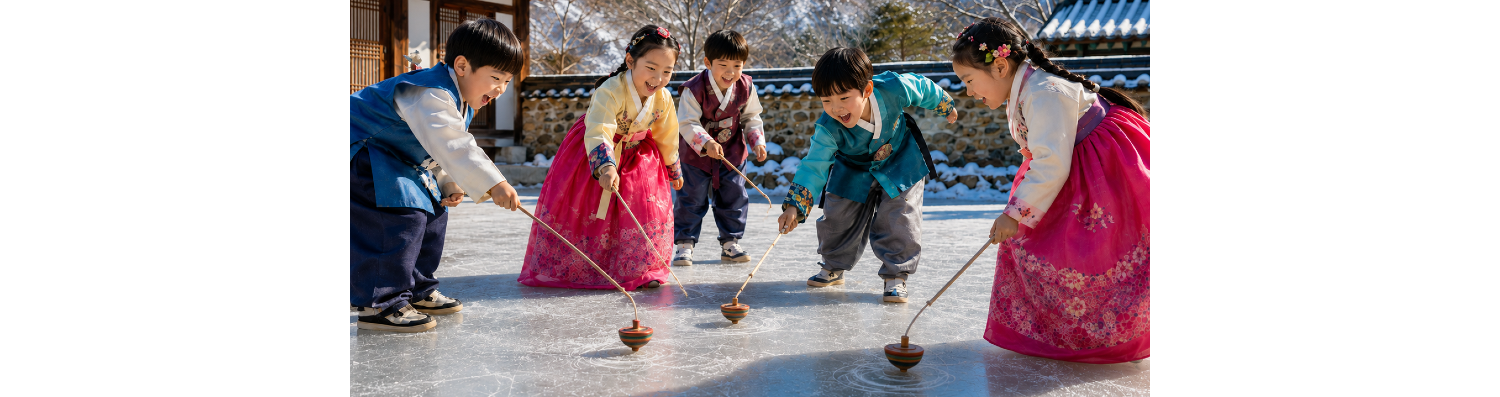
How do you teach a five-year-old the physics of angular momentum, friction, and stability? If you are Minyoung Gil, Ph.D., an assistant professor in the School of Teaching, Learning & Curriculum (TLC) in the College of Education and Human Services, the answer does not lie in a textbook. It lies in a spinning top.

As a newly named member of the Summer 2026 cohort for The John and Fonda Elliot Design Innovation Faculty Fellows Program, Gil is bridging the gap between historical childhood play and cutting-edge digital fabrication. Her project, “Designing a STEM Play Toolkit: A Teacher Guide for 3D-Printed Spinning Tops,� introduces a unique framework where cultural heritage intersects with modern technology.
Through the initiative, Gil is challenged to consider a central question: “How might educators prototype a culturally inspired STEM Play Toolkit that helps teachers support young children’s STEM learning?�
Inside the Makerspace Laboratory
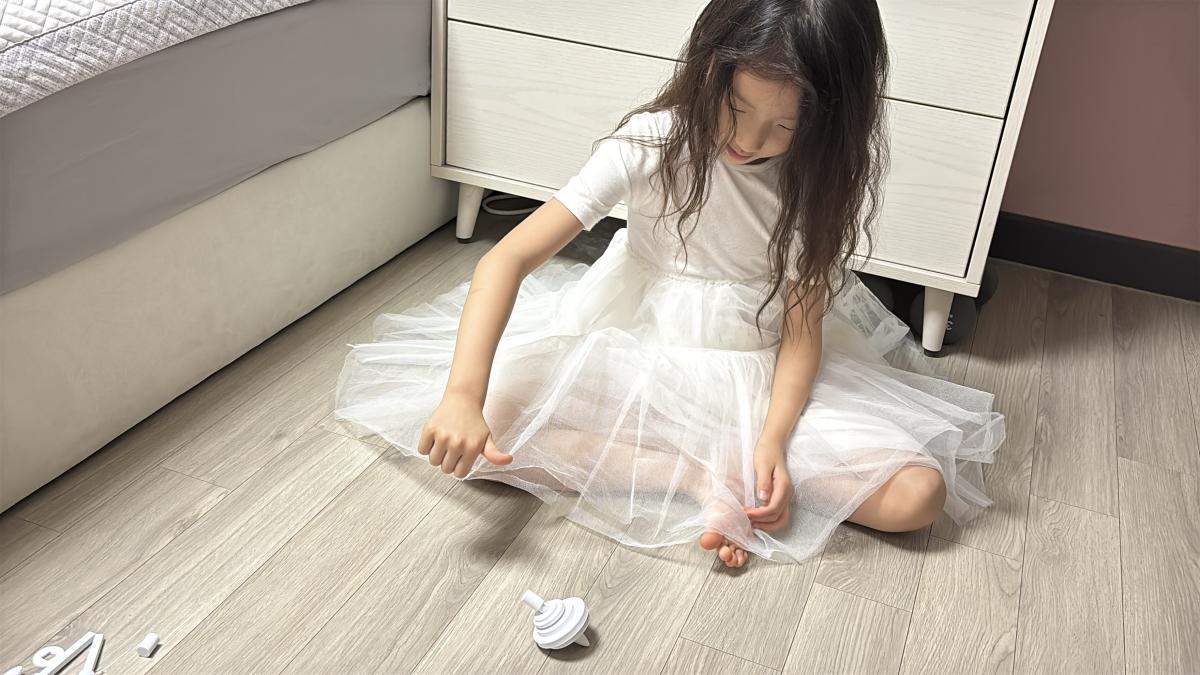
Partnering with the Design Innovation (DI) initiative, Gil’s research harnesses high-tech tools like 3D printing to prototype "STEM Play Toolkits." In the classroom, this translates into children building and customizing their own spinning-top disks, sliding them onto a 3D-printed spindle with a pointed tip, and running live data tests.
Gil’s summer project is grounded in the theory that spinning tops invite children to explore movement, balance, force, competition, skill, and design. By using 3D printing, students and teachers can customize the top’s shape and structure while maintaining the playful spirit that traditionally comes with tops.
Young learners observe how long different shapes spin, measure the results, and dynamically redesign their toys based on physical evidence – exercises that turn an everyday toy into a tangible lesson on engineering and physics.
“By embedding scientific inquiry directly into culturally connected play, we unlock a child's natural curiosity,� said Gil, who also serves as a Fellow for the Gerald H. Read Center for International & Intercultural Education. “Early childhood is a critical window for cognitive development, and early STEM-related learning is vital because it establishes a foundational mindset of inquiry, resilience through trial-and-error, and critical thinking that shapes how children solve problems for the rest of their lives.�
Elevating Teachers as Creators
The impact of the project extends far beyond the children. A core goal of the STEM Play Toolkit is to fundamentally change how educators view their roles, transforming them from passive consumers of pre-made lesson plans into active classroom designers. By equipping teachers with a comprehensive guidebook and open-ended prompts, the project helps educators explicitly spot and highlight STEM activities happening right under their noses during recess or free play.
Crucially, the project is designed with equity in mind. Acknowledging that 3D printers are not available in every school or district, Gil’s future framework also includes low-tech pathways. If digital fabrication tools are inaccessible, the guide teaches instructors how to replicate the identical mechanical STEM lessons using everyday items like cardboard, wood, and recycled household plastics.
A Catalyst for Interdisciplinary Breakthroughs
The six-week, intensive faculty fellows program provides selected faculty with the dedicated space, funding, and resources to bring trans-disciplinary initiatives to life. For the School of Teaching, Learning & Curriculum, this cross-campus collaboration is an essential driver of educational evolution.
“The university's educational ecosystem thrives when we break down traditional academic silos,� said Scott Courtney, Ph.D., associate professor and TLC school director. “The John and Fonda Elliot Design Innovation Faculty Fellows Program is an extraordinary catalyst for our faculty. It provides the crucial time, space, and collaborative freedom necessary to cross disciplinary boundaries, allowing educators to merge pedagogical theory with human-centered design to build scalable, real-world solutions that reshape today’s classrooms.�
With initial summer prototyping wrapping up, Gil’s next steps involve piloting the guidebook across regional elementary classrooms and establishing partnerships with public libraries and community makerspaces to ensure every child can keep learning in motion.